About India
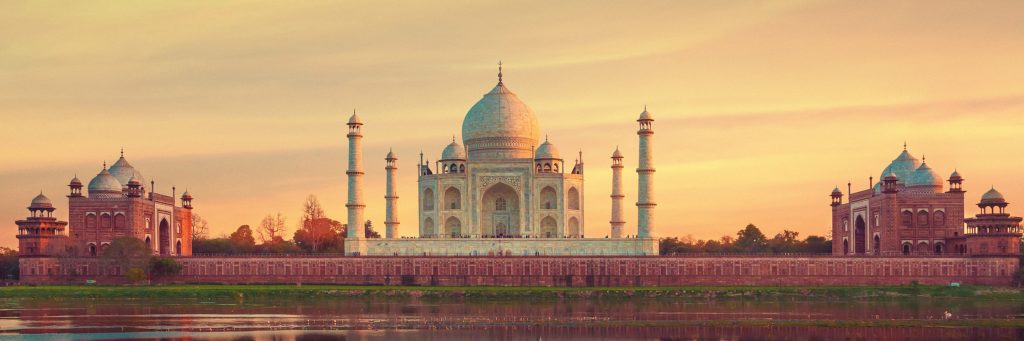
India
This South Asian country, which is one of the most populous in the planet (at 1.25 billion people) has a rich history that goes back thousands of years, such as the Indus civilization – which existed the same time as Ancient Egypt and Sumer, but lasted far longer. India is also home of the Buddhist & Hindu religions, as well as having a significant population of Muslims. There are also followers of the Sikh religion, as well as Christianity in that country.
During India’s Medieval period, the Gupta dynasty was the greatest to rule in the north after the Mauryas, heralding a period known as the ‘Golden Age of India’. This, while in the southern part of India several different empires –the Cholas, the Pandyas and the Cheras — spread and grew, trading with Europe and other parts of Asia till the end of the 1100s.
During the 16th century, the Mughals came from Central Asia and soon held sway over most of the northern parts of the Indian subcontinent. Mughal rulers introduced Central Asian art and architecture to India. In addition to the Mughals and various Rajput kingdoms, several independent Hindu states, such as the Vijayanagara Empire, the Maratha Empire, and the Ahom Kingdom, flourished simultaneously in southern, western, and north-eastern India, respectively. The Mughal Empire suffered a gradual decline in the early 18th century, which provided opportunities for the Afghans, Balochis, Sikhs, and Marathas to exercise control over large areas in the northwest of the subcontinent until the British East India Company gained ascendancy over South Asia.
The British ruled over India from 1858 to 1947, when the country finally gained independence. This occurred after a long freedom struggle led largely by the Indian National Congress and its visionary leaders, especially, Mahatma Gandhi. From 1920, the freedom movement leaders began highly popular mass campaign against the British Raj using largely peaceful methods. India’s acquisition of independence resulted in the formation of two countries, India and Pakistan. Following the controversial partition of India, rioting broke out, leaving some 500,000 dead. Also, this period saw one of the largest mass migrations ever recorded in modern history, with a total of 12 million Hindus, Sikhs and Muslims moving between the newly created nations of India and Pakistan.
Despite pressing problems, such as significant overpopulation, environmental degradation, widespread poverty, and corruption, economic growth – following the launch of economic reforms in 1991, and a massive youthful population, are driving India’s emergence as a regional & global power. Due to its population, India is reputed to be the largest democracy in the world.
Tourism in India is a work in progress, contributing around 6.77% to the country’s total GDP. In 2013, India attracted nearby 6.9 million visitors. That number is dwarfed by China (which attracted 129 million in 2013). The Indian government needs to educate foreigners on things to see and do in the country beyond seeing the Taj Mahal.